

Introducing Indicative REC Prices on CnerG
CnerG Stories, Product | May/27/2026
 Pricing is one of the first questions companies ask when they begin looking at renewable energy certificates. It is also one of the hardest to find an answer to. For many buyers, this creates a gap before procurement even begins. They may know which markets they are interested in, or which certificates they need for their renewable energy strategy, but they still need a practical sense of where prices currently stand before finalizing procurement plans.
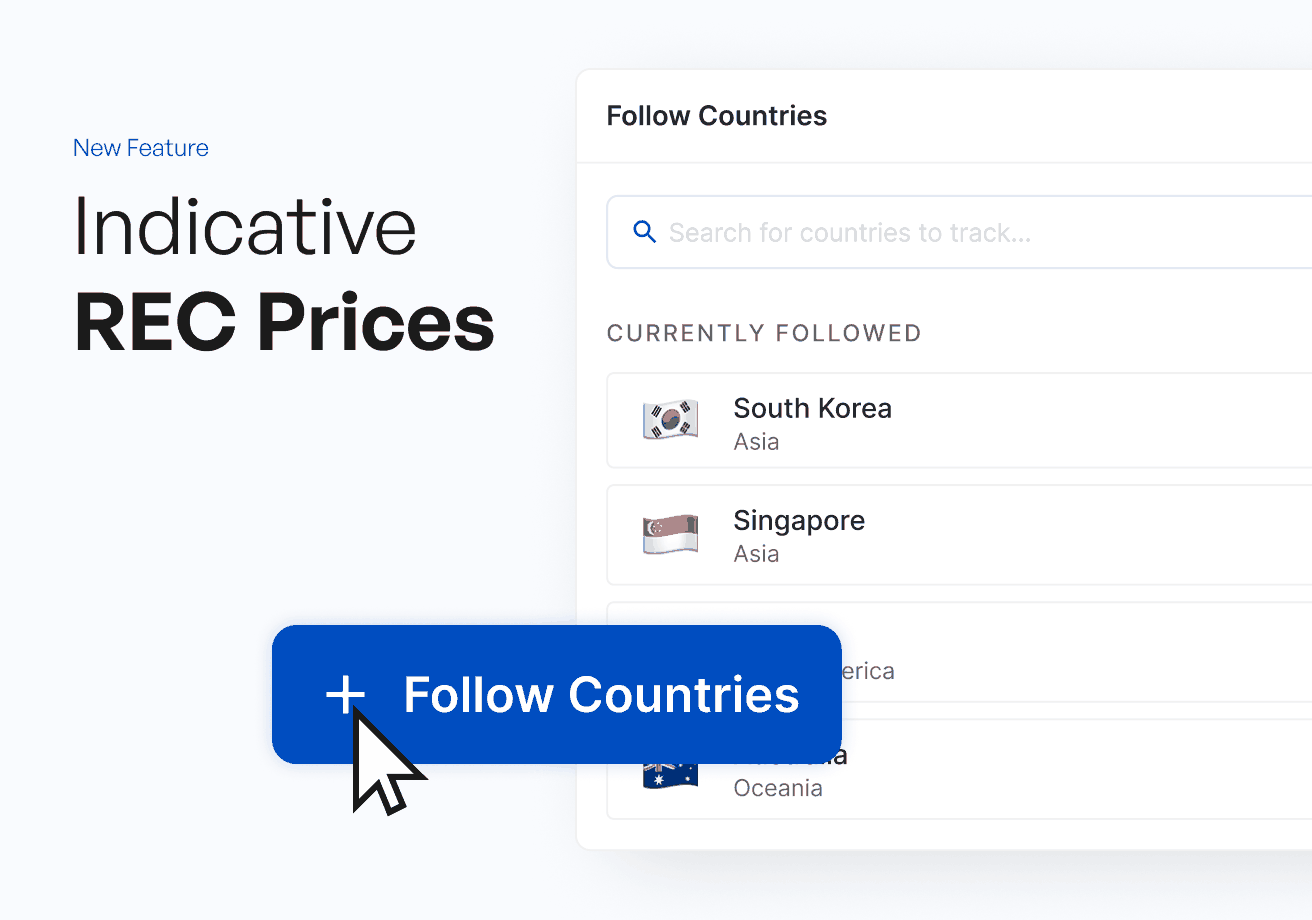
That is why we added Indicative REC Prices to the CnerG platform. Users can now view estimated REC prices by region, country, product, and fuel type, follow selected countries, and track recent price movements in one place. The feature is available after signing up to the platform for free.
What Are Indicative REC Prices?
Indicative REC Prices are estimated prices shown on the CnerG platform to help buyers understand current REC price levels before starting a procurement request. The feature is designed to give users a quick view of where prices stand across selected countries, products, fuel types, and vintages.
This is especially useful at the early stage of procurement. Before asking for a quote, buyers often want to understand what kind of pricing to expect, which countries are relevant, and whether prices have recently moved up or down. Indicative REC Prices help answer those first questions in a simple, accessible way.
Indicative prices are shown for reference and do not constitute a binding offer. Actual transaction prices may vary based on volume, timing, availability, and other market factors. Still, they give buyers a clearer starting point before requesting a formal offer from CnerG.
Why Price Visibility Matters in REC Procurement
REC procurement can be difficult to plan when price information is scattered or unavailable. Buyers often need to contact multiple providers, request separate quotes, and compare information manually before they can understand the market. This slows down decision-making, especially for teams working across several countries.
Price visibility helps buyers build a more realistic starting point. It allows them to understand which markets may require a larger budget, which products may be more accessible, and how current price levels compare across the countries they are already considering for procurement.
This does not replace the need for a formal quote. REC pricing still depends on market conditions and transaction details. But having an indicative price view can make the procurement process more informed from the beginning, especially for teams that need to plan budgets or prepare internal discussions before submitting a request.
What REC Prices Depend On
REC prices are shaped by the market they come from. In some cases, that means a specific country. In others, it may mean a broader recognized market boundary, such as regional REC systems where certificates can be used across several countries, such as GO or US REC. Each market can have different levels of available supply, buyer demand, and product availability, along with the rules and expectations that determine which certificates buyers can use.
This is why prices are best understood in relation to the specific certificate a buyer needs. Companies may be looking at I-RECs, K-RECs, GECs, or other certificate types depending on where they operate and what kind of renewable energy claim they need to support.
Pricing can also differ by fuel type and vintage. Some buyers may prefer solar, wind, hydro, or another generation source, while others may need certificates from a particular reporting year. Final transaction prices may still differ from the estimates shown on the dashboard, since volume, timing, availability, and the exact procurement request all affect the offer a buyer receives.
How to Explore Indicative REC Prices
Indicative REC Prices are available from the Market section of the CnerG platform. From there, users can narrow the view by region, country, product, and fuel type to find the price estimates most relevant to their procurement plans.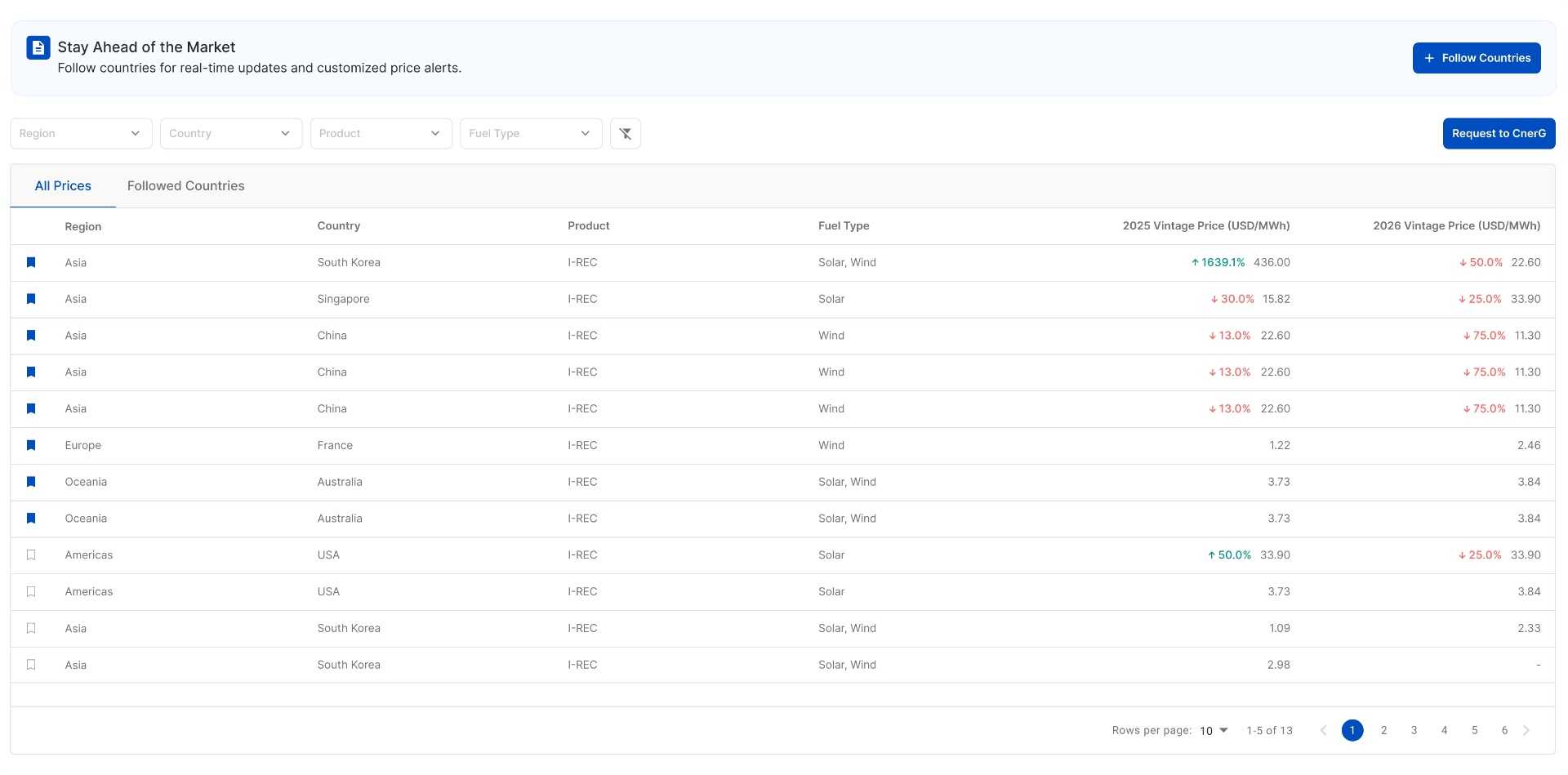
The price view shows REC estimates by market, including the vintages currently available for relevant reporting-year needs. This helps buyers understand current price levels before submitting a request.
Recent price movement indicators show whether selected prices have moved up or down compared with previous market data. This helps buyers spot changes at a glance, without needing to collect separate updates from multiple sources.
When users are ready to move from price research to procurement, they can select “Request to CnerG” directly from the page. From there, CnerG can review the request and provide a formal offer based on the buyer’s specific needs.
Follow the Countries You Care About
Most buyers do not need to monitor every REC market at once. They usually have a smaller set of countries that matter most, whether because of their operations, supplier footprint, or reporting priorities.
With Follow Countries, users can keep those priority markets in one place. Once a country is followed, it appears in a separate view with its available REC price estimates, making it easier to return to the markets that are most relevant without filtering through the full list each time.
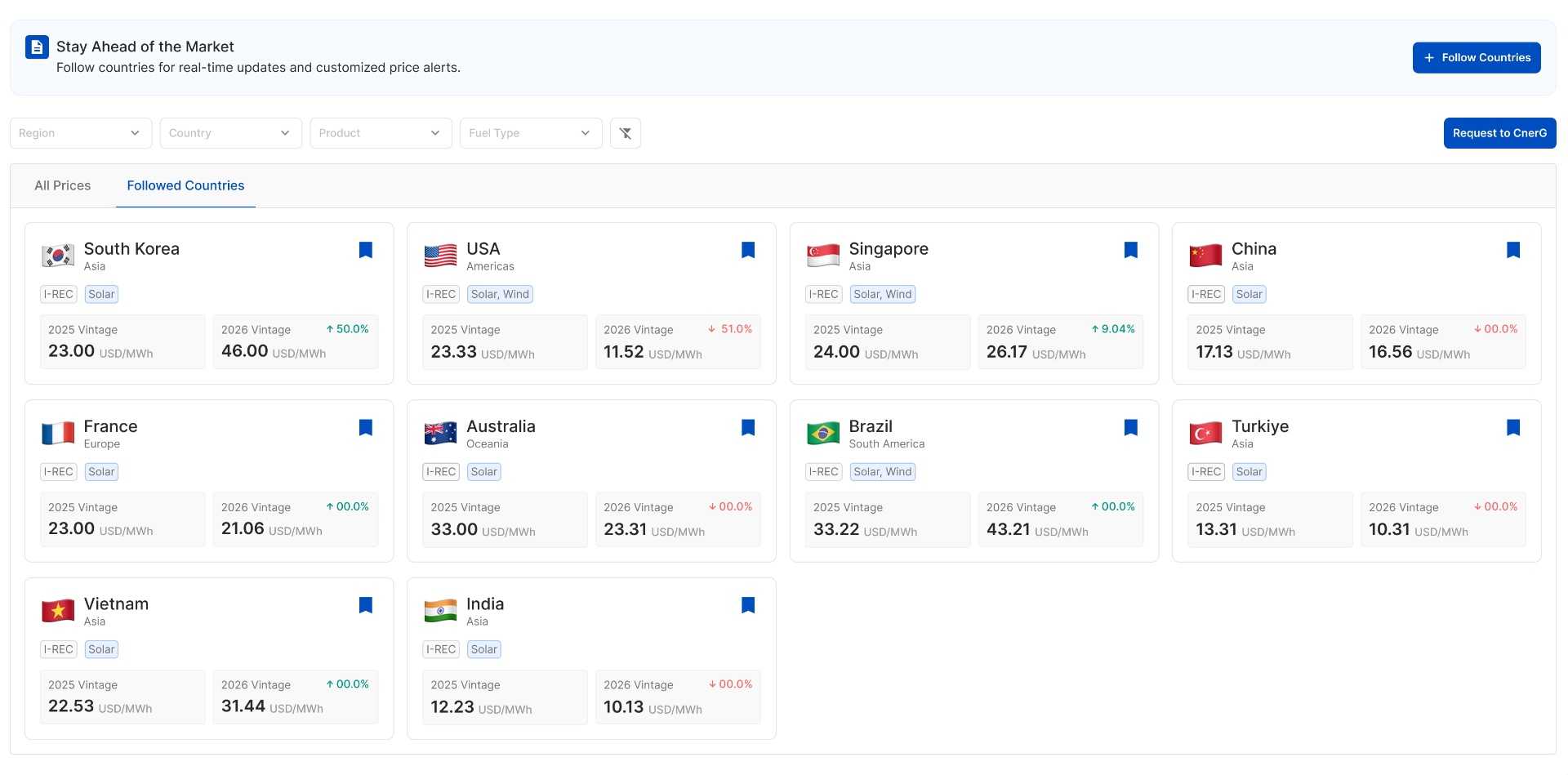
As procurement needs change, the list can change too. Users can add new countries when a market becomes relevant, or remove countries they no longer need to track. This makes the price view more practical for teams that want to monitor specific REC markets over time.
How to Get Started
Indicative REC Prices are available after signing up to the CnerG platform for free. The feature is designed to make the first step easier. This gives users a simple way to explore estimated REC prices before starting a formal procurement request.
For companies that are still planning their renewable energy strategy, it can support early market research and budget discussions. For buyers who are already preparing to procure, it can help narrow the focus before submitting a request to CnerG.
Summary
What Are Indicative REC Prices?
Why Price Visibility Matters in REC Procurement
What REC Prices Depend On
How to Explore Indicative REC Prices
Follow the Countries You Care About
How to Get Started
Related Content




Take Control of Your Emissions Today!
Take Control of Your Emissions and Sustainability Strategy